From Talent to Passport: Slovenia’s Fast-Track Citizenship Strategy for Elite Athletes

In the world of international sports, citizenship is no longer only a matter of ancestry, birthplace, or long-term residence. For certain countries, it has also become a strategic tool to attract exceptional talent, strengthen national teams, and compete more effectively on the global stage.
Slovenia is one of the jurisdictions where this trend is becoming increasingly relevant.
Known for producing elite athletes across disciplines such as basketball, cycling, skiing, judo, volleyball, handball, and sport climbing, Slovenia has built a strong international sporting identity despite its relatively small population. But in some sports, the country may still benefit from targeted reinforcement — especially where one world-class athlete can significantly improve national performance.
This is where merit-based citizenship for high-performance athletes becomes important.
Citizenship as a Tool for Sporting Competitiveness
Slovenia’s legal framework allows for extraordinary naturalization when granting citizenship is considered to be in the national interest. This type of pathway is not designed for ordinary applicants. It is reserved for cases where the individual may bring exceptional value to the country in a relevant area of public life.
In practice, elite athletes may fall into this category when their profile can support Slovenia’s international sporting objectives.
This does not mean that every professional athlete can automatically obtain Slovenian citizenship. The process is highly selective. The athlete’s competitive record, discipline, ranking, transfer eligibility, age, international potential, and ability to represent Slovenia must be assessed individually.
The key question is not simply whether the athlete is talented. The real question is whether the athlete can realistically serve Slovenia’s national interest.
Why Athletes May Be Considered for Fast-Track Citizenship
For a small but highly competitive country, one athlete can make a major difference.
In individual sports, a single top performer may immediately increase the country’s chances of qualifying for European Championships, World Championships, or the Olympic Games. In team sports, a naturalized player may fill a specific tactical gap, add depth to the national team, or strengthen a position where the domestic player pool is limited.
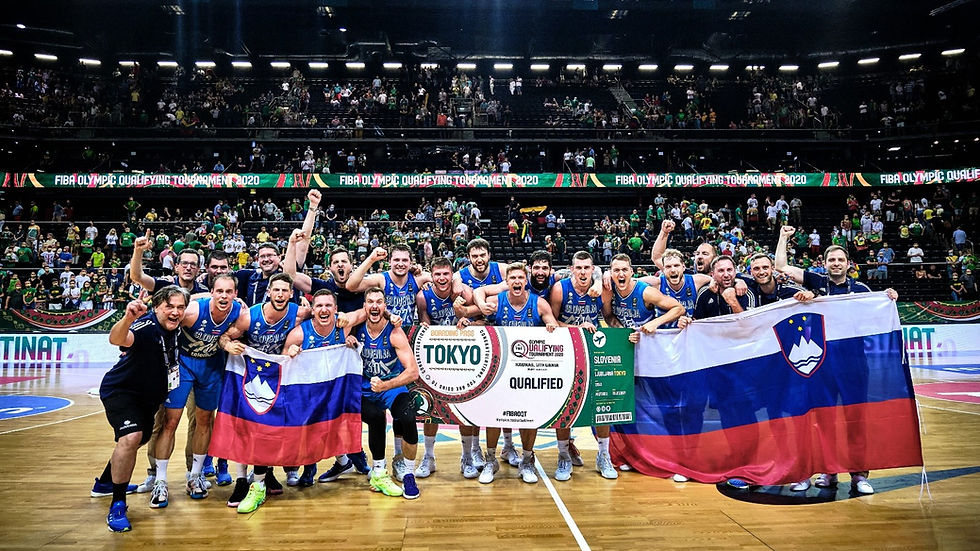
This is already common in international basketball, where national teams often naturalize one foreign-born player to improve competitiveness. Slovenia has previously used naturalized players in basketball, and the country continues to attract attention because of its strong basketball identity and global stars.
The same logic may extend to other sports where Slovenia has federations, competitive infrastructure, and a realistic need for additional talent.

Two Possible Athlete Profiles
There are generally two broad categories of athletes who may be considered.
The first category includes truly elite athletes. These are top-level professionals or high-performance competitors whose international record is already strong enough to justify an exceptional case. For this type of athlete, citizenship may potentially be processed faster if the national interest argument is strong and the relevant institutions support the application.
The second category includes professional athletes who may not yet be at the absolute top of their sport but still have meaningful potential. These athletes may need to establish a stronger connection with Slovenia first, including residence, club involvement, training activity, federation alignment, or participation in the development of the sport locally.
In this second scenario, the pathway is usually more dependent on strategy, timing, and the athlete’s willingness to build a genuine sporting link with Slovenia.
The Importance of the Sport Itself
Not all sports offer the same opportunity.
Some disciplines are more realistic because Slovenia has an existing federation, a competitive structure, and a clear need for reinforcement. Others may be more difficult because Slovenia is already strong, the national team is deep, or international transfer rules are restrictive.
The most promising opportunities are often found in sports where one athlete can make an immediate difference and where the transfer rules are manageable.
Examples may include technical individual sports, combat sports, niche Olympic disciplines, and selected team sports where Slovenia needs depth. Sports such as shooting, archery, boxing, wrestling, ice hockey, table tennis, water polo, badminton, fencing, and modern pentathlon may present interesting opportunities depending on the athlete’s profile.
In these cases, the combination of national need, federation support, and international eligibility can create a realistic basis for consideration.
Sports With Slower or More Conditional Potential
Some sports may still be possible, but the pathway can be slower or more dependent on circumstances.
These may include disciplines such as MMA, kickboxing, speed skating, short track, triathlon, gymnastics, rowing, athletics, dance sport, breaking, and equestrian sports.
In these cases, the evaluation may be more complex. The athlete may need to demonstrate not only sporting ability, but also a realistic path to representing Slovenia under the relevant international federation’s rules.
Athletics, for example, can be especially strict when it comes to nationality transfers. International federation rules may impose waiting periods, eligibility requirements, or limitations that make the process more difficult than in other sports.
This is why citizenship and sports eligibility must always be analyzed together. Obtaining citizenship is only one part of the equation. The athlete must also be eligible to compete for Slovenia under the rules of the relevant sport.

Development Sports: More Than Just Competing
There is also a third category: development sports.
These are disciplines where Slovenia may not yet have a strong competitive structure but could benefit from an athlete willing to help build the sport locally. Examples may include baseball, softball, field hockey, lacrosse, cricket, flag football, curling, skeleton, luge, bobsleigh, savate, artistic swimming, and diving.
In these cases, the strongest candidates may not be those who only want to compete. The most attractive profiles may be athletes who can also help create clubs, train younger athletes, support coaching programs, build local pathways, or raise the visibility of the sport.
For Slovenia, this type of athlete may contribute not only through competition, but also through long-term development.
That distinction matters. In a development sport, the national interest argument may depend heavily on the athlete’s broader role in building capacity.
Sports Where Slovenia May Have Less Immediate Need
Some sports may be lower priority because Slovenia is already highly competitive.
This may include disciplines such as sport climbing, judo in certain categories, slalom canoeing, road cycling, ski jumping, alpine skiing, men’s volleyball, men’s handball, sailing, and kitesurfing.
In these areas, an athlete would generally need to be exceptional to justify a strong case. If the country already has world-class competitors, Olympic medalists, or deep national teams, the added value of a foreign athlete may be harder to prove.
This does not make the pathway impossible, but it raises the standard.
The Role of Federations and Sporting Institutions
Federation support is often one of the most important factors in these cases.
A government is unlikely to treat an athlete as being in the national interest unless the relevant sporting institutions agree that the athlete can contribute meaningfully to Slovenia.
This may involve the national federation, the Olympic Committee, clubs, coaches, or other sporting bodies. Their support can help demonstrate that the athlete is not merely seeking a passport, but is genuinely aligned with Slovenia’s sporting objectives.
A strong application may include evidence of the athlete’s achievements, rankings, competition history, professional contracts, transfer eligibility, future competition calendar, training plans, and expected role within the Slovenian sporting system.
The stronger the federation endorsement, the stronger the national interest argument becomes.

Citizenship Does Not Automatically Mean Eligibility to Compete
One of the most important points is that citizenship and sporting eligibility are separate issues.
A country may grant citizenship to an athlete, but the international federation governing the sport may still impose additional requirements before the athlete can represent the new country.
These rules vary widely by sport.
Some federations allow transfers after a relatively short waiting period. Others require several years, prior release from the former national federation, proof of residence, absence from recent competition for the previous country, or approval from international authorities.
This means that every case must be analyzed sport by sport.
For example, the pathway for a basketball player may differ significantly from the pathway for an archer, boxer, wrestler, fencer, swimmer, or track and field athlete.
A successful strategy must align three elements: Slovenian citizenship law, federation support, and international eligibility rules.
A Possible Step-by-Step Framework
Although every case is different, a typical process may involve several stages.
First, the athlete’s profile must be assessed. This includes rankings, results, age, discipline, competition history, and future potential.
Second, the legal basis must be evaluated. The central question is whether the athlete’s naturalization can be presented as being in Slovenia’s national interest.
Third, the international federation rules must be reviewed. There is little value in pursuing citizenship if the athlete cannot realistically represent Slovenia in the relevant competitions.
Fourth, documentation must be prepared. This may include identity documents, sports records, contracts, awards, letters of support, competition results, and evidence of professional background.
Fifth, support from the relevant federation or sporting institution must be obtained. This is often the strongest practical element in the application.
Sixth, the application is submitted through the appropriate legal channel for review by the competent authorities.
Finally, if citizenship is granted, the athlete must still comply with the transfer and eligibility rules of the relevant international federation before representing Slovenia.
Why This Matters for International Sports
Slovenia’s approach reflects a broader global trend.
Countries increasingly understand that sports can be part of national branding, diplomacy, youth development, and international visibility. A medal, a World Championship appearance, or a strong Olympic performance can have value far beyond the playing field.
For athletes, merit-based citizenship can also open a new professional chapter. Some athletes may come from countries where competition for national team places is extremely difficult. Others may have limited institutional support in their original country. A transfer to a smaller but well-organized sporting nation may offer a more realistic route to international competition.
For countries like Slovenia, the opportunity is to identify athletes who can strengthen national teams while also contributing to the local sporting ecosystem.
The best cases are those where both sides benefit: the athlete gains a legitimate pathway to represent a new country, and Slovenia gains a competitor who can raise performance, visibility, and long-term development.
Conclusion: A Strategic Opportunity for the Right Athletes
Merit-based citizenship for athletes is becoming an increasingly important part of global sports strategy.
For Slovenia, it can be a way to strengthen national teams, fill competitive gaps, and accelerate development in selected sports. For athletes, it can offer a new route to international representation when their profile aligns with Slovenia’s sporting priorities.
However, success depends on much more than sporting talent alone. The athlete must fit the country’s needs, satisfy legal requirements, obtain institutional support, and comply with the rules of the relevant international federation.
In the right case, this pathway can be powerful. But it must be approached as a serious legal and sporting strategy — not as a shortcut.
Slovenia’s model shows how citizenship, national interest, and elite sport can intersect in a highly selective but increasingly relevant way.
At Creimerman Law, we assist international athletes, families, agents, clubs, investors, and globally mobile individuals with immigration planning, citizenship strategies, residency options, cross-border structuring, and long-term global mobility solutions.
For high-performance athletes considering international representation or broader global mobility planning, early legal guidance is essential. Proper planning can help assess eligibility, reduce risks, clarify federation requirements, and ensure that each step is aligned with the athlete’s long-term career and mobility goals.
Contact us at info@creimermanlaw.com for personalized guidance.
Schedule a confidential consultation:
Visit our website to learn more about our expertise in citizenship planning, residency strategies, investor immigration, international structuring, tax residency, and global mobility matters: